
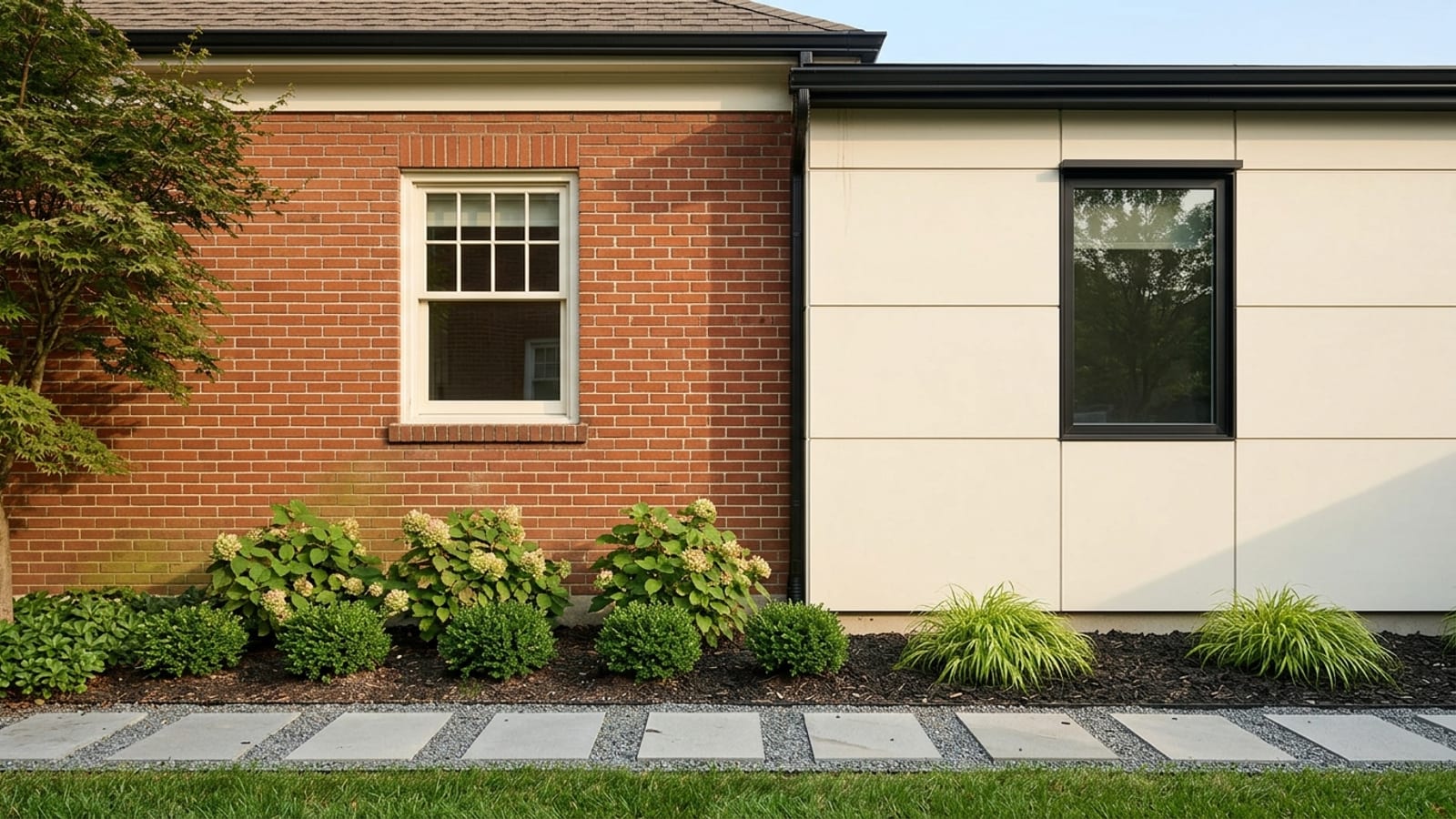
Trying to decide whether to renovate or rebuild your Mount Vernon, VA home? It is a big financial and lifestyle choice, and in an area with older housing stock, the answer is not always obvious. If you own a home in Mount Vernon, Fairfax County data suggests you are far from alone in facing this question. In this guide, you will learn how to weigh lot constraints, zoning, budget, resale potential, and neighborhood comps so you can make a smarter next move. Let's dive in.
Why This Choice Matters in Mount Vernon
Mount Vernon has the kind of housing mix that makes this decision especially relevant. Fairfax County reports that 46% of the district's housing units are single-family detached homes, and a large share of homes were built decades ago.
That matters because older homes often come with a real tradeoff. You may love the location and lot, but the structure, layout, or systems may no longer fit how you want to live. In some cases, a thoughtful renovation is enough. In others, rebuilding may be the cleaner long-term solution.
Mount Vernon also includes a broad range of housing types and values. Fairfax County estimates the median market value of owned housing in the district at $665,569, with a median owned home size of 1,518 square feet. That variety is one reason block-level analysis matters more than county averages when you are deciding how much to invest.
Start With the Lot, Not the House
Before you build a budget, you need to understand what the lot can support. Fairfax County advises homeowners to confirm the parcel's zoning district, review permitted uses, and check setback requirements under the zoning ordinance. A rebuild that looks feasible at first glance can fall apart quickly if the lot has zoning, setback, or easement limits.
The county also notes that a lot is generally limited to one dwelling unit, with some exceptions. If you are thinking beyond a standard renovation, this can affect your plans. Accessory living units may be approved separately and generally require owner occupancy, so assumptions can be costly.
Easements are another early checkpoint. Fairfax County states that easements can block structures, which means they may limit additions, footprint changes, or a full replacement plan. You should also separately verify any HOA rules or deed restrictions, because the county does not enforce private covenants.
Check Floodplain and RPA Issues Early
In Mount Vernon, site conditions are a major part of the decision. Fairfax County explains that all county land drains to the Potomac River and Chesapeake Bay, and some properties may be affected by floodplain regulations or Resource Protection Area rules. If your property is in or near an RPA, development is regulated under the Chesapeake Bay Preservation Ordinance.
This is one reason two homes on nearby streets can have very different project paths. Floodplain use determinations, soils, grading, site plans, and parking can all affect approvals, design, timing, and cost. If you skip these checks, your budget may not reflect the real scope of the project.
Renovate or Rebuild in Mount Vernon VA: How to Read the Signs
A renovation usually makes more sense when the home has a solid foundation and the main issues are cosmetic, functional, or layout-related. If you can improve the floor plan without dramatically changing the footprint, renovation often gives you a more efficient path. This is especially true when the finished home can meet neighborhood expectations without triggering major site complications.
In Mount Vernon, that might mean updating an older detached home with improved kitchen and bath finishes, better flow, or modest additions where site conditions allow. It can also mean preserving a location you already love while avoiding the time and complexity of a full teardown and new build. For many homeowners, that balance is attractive.
That said, a large renovation can become more expensive than expected. Fairfax County's permitting guidance shows that structural changes, code requirements, grading, soils, design review issues, and trade permits can add cost and time. A renovation that looks straightforward on paper can begin to resemble a rebuild budget once those items are fully counted.
Signs Renovation May Be the Better Fit
You may want to lean toward renovation if:
- The house is structurally sound
- The current footprint mostly works
- The lot has constraints that limit expansion or replacement
- The needed changes are focused on layout, finishes, or systems
- Nearby sales do not support the premium a new build would require
If most of those points apply, renovation may offer the better return on effort and cost.
Rebuild When the House Is the Weak Link
A rebuild often makes more sense when the existing home needs major structural, systems, and layout work all at once. If you are replacing the roof, reworking the floor plan, upgrading electrical and plumbing, and still ending up with compromises, it may be worth stepping back and looking at the lot as the true asset.
This option tends to work best when the parcel can support the new home within zoning and setback rules, and when nearby comparable sales support the likely finished value. In other words, the economics need to work both on the construction side and the resale side. A new home may be more functional and more appealing to future buyers, but that does not mean every lot can justify the cost.
In Mount Vernon, this can be a very case-by-case call. The district has older homes, mixed-age housing stock, and varied price points, so the right answer on one block may be the wrong answer a few streets over. That is why comps should guide the decision, not just construction ambition.
Signs Rebuild May Be the Better Fit
A rebuild may deserve stronger consideration if:
- The home needs extensive structural and systems work
- The layout no longer fits modern living patterns
- The lot can accommodate a new footprint within county rules
- Site conditions do not create major barriers
- Nearby sales support the projected finished value
When those factors line up, rebuilding can produce a better long-term outcome than trying to force an outdated structure to do too much.
Compare Three Numbers Before You Commit
One of the clearest ways to make this decision is to compare three figures side by side. First, estimate the all-in cost of a major renovation. Second, estimate the all-in cost of a teardown and new build. Third, compare both numbers to the likely resale ceiling based on nearby comps.
That third number is critical. Current Fairfax County and Northern Virginia market data gives useful context: Bright MLS reports a Fairfax County median sold price of $752,250 in August 2026, down 0.4% from a year earlier, with closed sales down 5.7% and a median of 13 days on market. Even so, pricing is still driven by comparable sales, local market conditions, and property features.
Based on information from Bright MLS for August 1, 2026 through August 31, 2026; data is reliable but not guaranteed.
That means spending more does not automatically create a matching jump in value. A beautifully executed project can still run into a neighborhood price ceiling. In practical terms, you want the finished product to fit the local market, not outrun it.
Understand Replacement Cost vs. Market Value
If you are evaluating a teardown or significant rebuild, replacement cost is the right budgeting lens. The Virginia State Corporation Commission defines replacement cost as the amount needed to rebuild a house at today's prices for materials and labor. That can differ substantially from what you paid for the home or what the tax assessment shows.
This is an easy place to get off track. Market value tells you what buyers may pay for the property in the current market. Replacement cost tells you what it may take to rebuild it. The two numbers serve different purposes, and confusing them can lead to poor planning.
Know the Permit Path Before You Choose
The permit path is different for a renovation versus a rebuild, and that difference affects cost, timing, and complexity. Fairfax County requires a residential demolition permit for complete or partial demolition, including pools. A new single-family home or a new dwelling on an existing foundation requires a residential new building permit.
For most renovations, the county requires an addition or alteration permit. Both renovation and new-build projects move through county review and inspections, and new homes must receive a final Residential Use Permit before occupancy. Knowing this early can help you set more realistic expectations for timeline and process.
If you are comparing options, do not just compare design costs or contractor estimates. Compare the likely county review path, site challenges, and the amount of coordination the project will require from start to finish. Understanding Fairfax County real estate tax implications is also worth factoring into your total cost of ownership before you commit.
A Simple Decision Framework for Mount Vernon, VA
If you want a straightforward way to think about the choice, start here:
In Mount Vernon, this process matters because housing stock, lot conditions, and property values can vary significantly within the district. A data-driven approach helps you avoid overbuilding, underestimating costs, or missing a better option.
Whether you are weighing a strategic renovation, exploring a teardown opportunity, or trying to understand resale potential before making a major investment, working with an advisor who understands both the local market and the process can save you time and costly missteps. If you want tailored guidance for your property in Mount Vernon or anywhere in Northern Virginia, connect with Artur Guney.
FAQs
How do you know if a teardown is allowed in Mount Vernon, Fairfax County?
- You should verify the property's zoning district, setback requirements, easements, floodplain or Resource Protection Area status, and any HOA or deed restrictions before moving forward.
What permits are needed for a rebuild in Mount Vernon, Fairfax County?
- Fairfax County requires a residential demolition permit for teardown work and a residential new building permit for a new single-family home, followed by inspections and a final Residential Use Permit before occupancy.
What permits are needed for a renovation in Mount Vernon, Fairfax County?
- Most renovation projects require an addition or alteration permit, and the exact scope of work can affect reviews, inspections, and related trade permits.
Is replacement cost the same as market value for a Mount Vernon home?
- No. Replacement cost is the amount needed to rebuild the home at today's labor and material prices, while market value reflects what the property may sell for.
Why do nearby comps matter so much for a Mount Vernon renovation or rebuild?
- Fairfax County pricing is driven by recent comparable sales, local market factors, and property features, so your likely resale value depends more on your immediate area than on broad county averages.
When does renovation usually make more sense than rebuilding in Mount Vernon?
- Renovation is often the better fit when the structure is sound, the footprint mostly works, and the home can be improved to meet local market expectations without major zoning or site obstacles.
When does rebuilding usually make more sense than renovating in Mount Vernon?
- Rebuilding may be the stronger option when the home needs major structural, systems, and layout work at the same time, the lot can support a new home, and nearby sales support the finished value.