Capitol Hill was designated locally in 1973 and listed on the National Register in 1976, and after expansions in 1976, 2003 and 2015 it covers roughly 710 acres and about 8,000 primary buildings.
Capitol Hill is the largest residential historic district in Washington, and its size is the first practical problem a buyer runs into. The district spans roughly 710 acres and more than 150 squares, with about 8,000 primary buildings inside it — and the MLS uses the name far more loosely than the boundary does. A listing headlined Capitol Hill may sit inside the district, just outside it, or several blocks beyond anything the Historic Preservation Office would recognize. Because the boundary decides whether your permit gets a design review, the useful conversation here starts with which squares you actually mean.
Local designation came in 1973. National Register listing followed on August 27, 1976, and the amended nomination carries a period of significance running from 1791 to 1945. The boundary was then enlarged in 1976, 2003 and 2015. Those expansion dates matter more than they sound: a block brought in during 2015 has been under design review for a decade, while houses a few streets away have been under it for fifty years, and the renovation history you see when you tour reflects that difference. Ask when the square you are buying on came into the district, not just whether it is in.
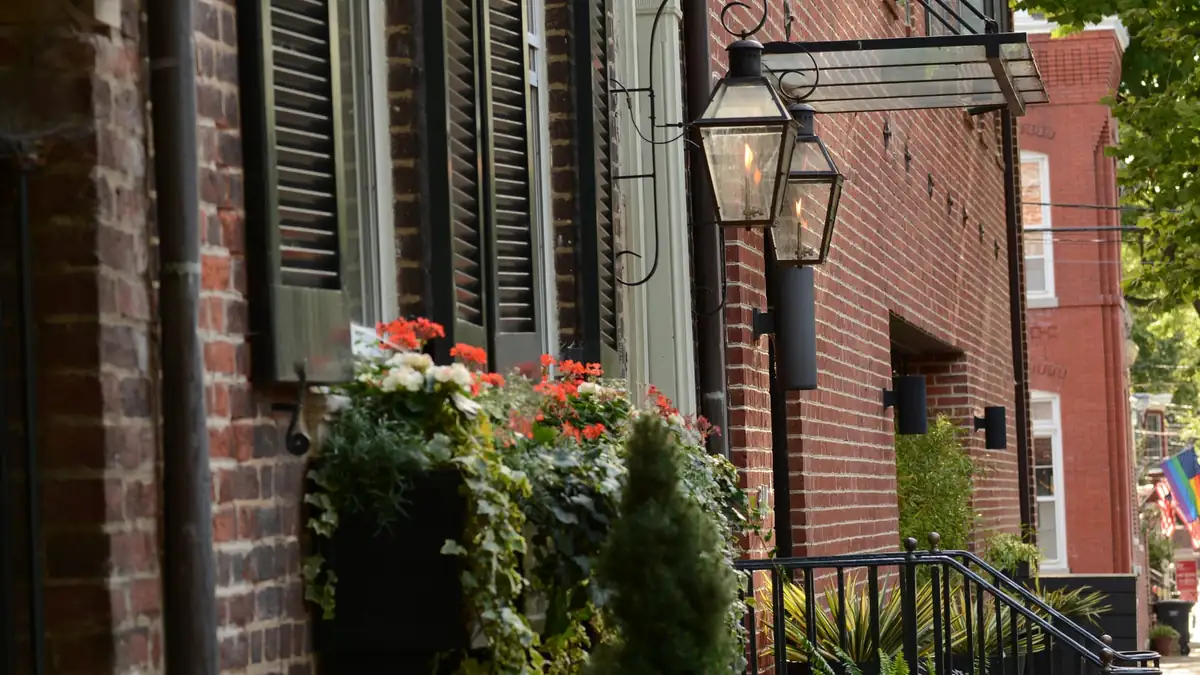
The stock is nearly all attached. Early Federal townhouses and small frame dwellings sit alongside Italianate rows and the late-nineteenth-century pressed-brick houses that carry Romanesque, Queen Anne and Eastlake detail. Philadelphia Row is an identified early post-Civil War speculative row and is the clearest illustration of how the district was actually built: in runs, by builders, one campaign at a time. Practically, that means a Capitol Hill comparison set has to be assembled by type and era rather than by radius. A small frame dwelling and a pressed-brick house on the same street are different products with different structures behind the façade.
Permit applications affecting property in the district are referred to the Historic Preservation Review Board, and review reaches exterior alterations visible from public space — which is why the site visit that determines visibility is often the decisive step. Under D.C. Code § 6-1107(c) the required finding must be made within 120 days of the referral. The standard is not symmetrical. For new construction, § 6-1107(f) directs that the permit issue unless the design and the character of the district are found incompatible. For demolition, § 6-1104 reverses that: no permit unless the Mayor finds issuance necessary in the public interest, or that refusal would cause unreasonable economic hardship to the owner. Budget the calendar, not just the construction.
If a house you are considering has sat unoccupied through an estate or a stalled renovation, check its tax classification before you write. Under D.C. Code § 47-812, Class 3 vacant property is taxed at $5.00 per $100 of assessed value and Class 4 blighted property at $10.00, against $0.85 for occupied residential. Exemptions exist and each runs on its own clock — half a tax year for a single-family property actively marketed, up to two tax years for pending zoning or historic approvals, up to three for active construction or rehabilitation — and together they cannot exceed five tax years in any twelve-year period. Pull the current classification from the Department of Buildings database and ask how much of that clock the seller has already spent. Limits current as of August 2026.
Capitol Hill addresses feed several elementary schools — among them Brent, Maury, Peabody and Watkins, Ludlow-Taylor, Payne and Miner — and then split between Eliot-Hine and Stuart-Hobson middle schools before Eastern High School. Which one serves a given house is a boundary question, not a neighborhood one, and it can change a block at a time. Verify the assignment for the specific address with DCPS. The Capitol Hill Restoration Society is a preservation and civic organization; there is no homeowners association here and no private assessment.
Bright MLS’s monthly figures for the District as a whole, not for Capitol Hill alone:
Based on information from Bright MLS for September 1, 2026 through September 30, 2026; data is reliable but not guaranteed.
Capitol Hill sits within Washington, DC — that guide covers the zoning, permitting and site constraints that apply across the wider area. This page is a guide rather than a listings feed; to see what is actually on the market, search current Washington, DC listings.
Artur can confirm what applies to a specific address here — lot, zoning, association documents and school assignment — before you write an offer.