
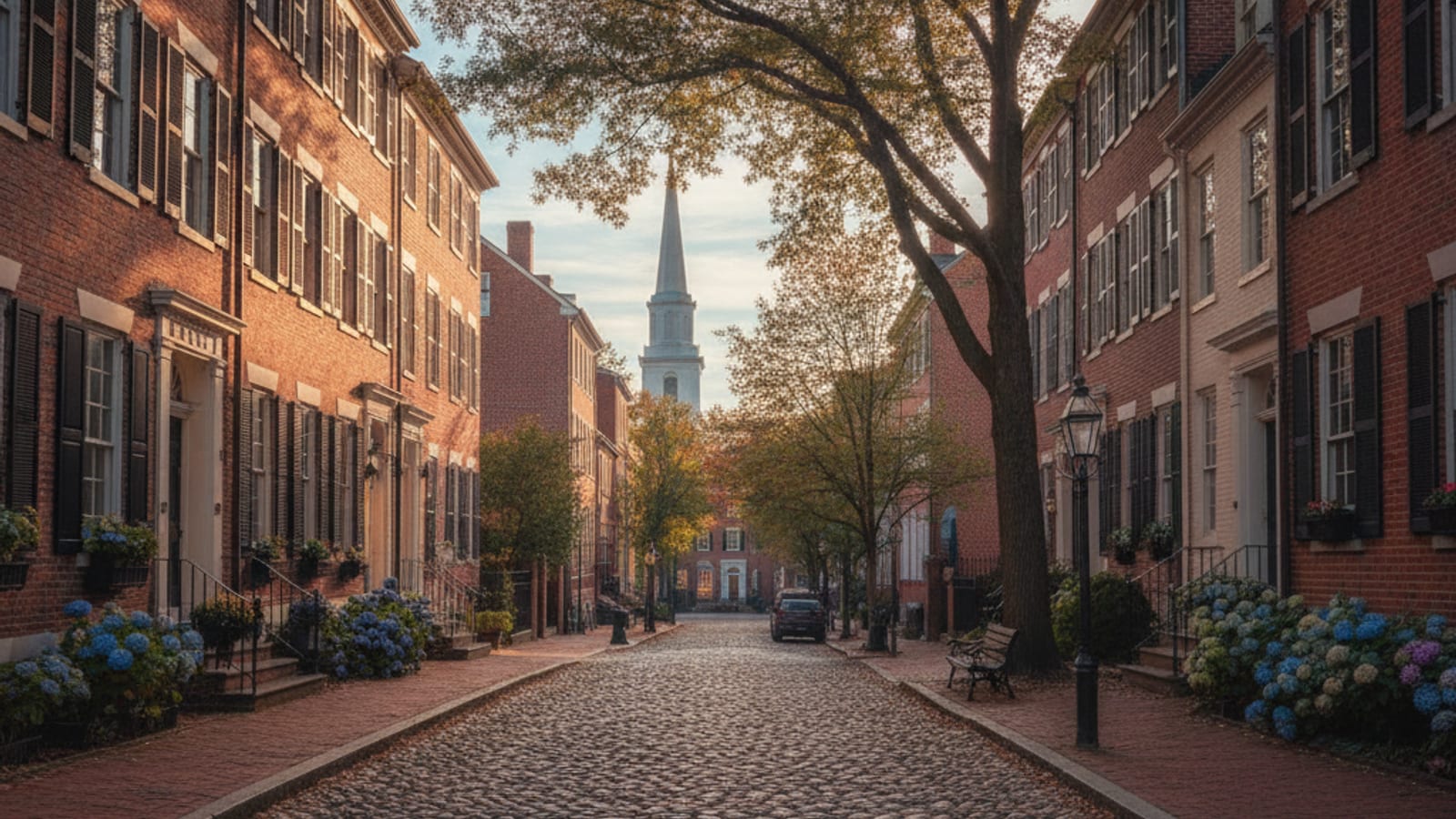
Choosing the right agent for historic homes in Old Town Alexandria is one of the most consequential decisions you will make before buying or selling a property in one of the Mid-Atlantic's most carefully preserved urban neighborhoods. The rowhouses, Federal-style townhomes, Georgian center-halls and Victorian cottages that line Old Town's streets are not simply old — they exist within a layered system of historic review, municipal regulation and physical quirks that the average residential agent rarely encounters. The questions below will help you evaluate any agent you are considering, and understand exactly why each topic matters before you commit.
Does the Agent Know the Historic Districts by Name and by Rule?
Old Town Alexandria contains two formally designated historic districts that carry real legal weight. The Old and Historic Alexandria District covers the core of Old Town and is one of the oldest locally designated historic districts in the country. The Parker-Gray District, northwest of the core grid, is reviewed by the same Board of Architectural Review, and the City publishes design guidelines for both districts. Old Town North, which the City's plan begins at Oronoco Street, sits partly within the Old and Historic District boundary as well.
Ask any agent you interview to describe both districts and explain how the boundary of each affects a specific property. An agent who is vague or who conflates the two has not worked deeply in this market. For a fuller look at what makes these streets distinct, the Old Town Alexandria homes and real estate overview outlines the housing stock and character of the area in detail.
How Does the Agent for Historic Homes Handle the Board of Architectural Review?
Exterior changes in either historic district that can be seen from a public way, such as a new front door, need a Certificate of Appropriateness (COA) from the City of Alexandria's Board of Architectural Review (BAR) or City preservation staff. Some demolition needs a separate permit even when it cannot be seen from a public way.
The City of Alexandria publishes the full review process, design guidelines, submittal schedules and application materials on its official site at alexandriava.gov. The City's pages are the authoritative source for which changes require BAR approval, what documentation must be submitted and how the review schedule works. An agent working in these districts should be able to point you directly to those pages, and should know to flag any unpermitted exterior alterations in a listing as a potential issue.
Ask your agent: Have you shepherded a transaction in which a COA was pending or had to be obtained? How did you handle it? The answer will reveal whether they understand the process as a practical matter, not just an abstract requirement. If you are selling, our guide to selling a historic rowhouse in Old Town Alexandria addresses how to position a property that has — or may need — BAR review.
What Does the Agent Know About Flood Zones and Low-Lying Blocks?
Old Town's proximity to the Potomac River and its tributary streams means that flood-zone status varies significantly block by block. A property on a waterfront block near the river or in a low-lying area along a drainage corridor may fall within a Special Flood Hazard Area, which affects insurance requirements, renovation costs and long-term ownership considerations.
The City of Alexandria maintains flood-map and floodplain information through its GIS and stormwater management resources at alexandriava.gov/stormwater. The Federal Emergency Management Agency's (FEMA) National Flood Insurance Program maps are also publicly available for any parcel. A knowledgeable agent will consult the City's resources early in a transaction — before an offer is written — and will know to flag when a lender will require flood insurance as a loan condition. Ask directly: How do you check the flood-zone status of a property, and at what point in the process? For a comparison of Old Town blocks by their waterfront proximity, see the Old Town Alexandria waterfront communities compared.
Does the Agent Understand Residential Permit Parking?
Parking in Old Town Alexandria is managed through the City's Residential Permit Parking (RPP) program. Specific blocks are designated as RPP zones, where vehicles without the proper permit may park only for a limited time, two or three hours depending on the location, during the posted hours. The zone a property falls within, and what that zone allows, can materially affect daily life for an owner — particularly on narrower blocks where off-street parking is limited or nonexistent.
The City of Alexandria provides the current map of RPP zones, eligibility rules and permit application process at alexandriava.gov. When evaluating a specific property, ask your agent to confirm which RPP zone the block falls in and whether any guest parking provisions apply. This detail is often overlooked in listings and is best addressed in due diligence rather than after closing.
What Should a Historic Home Inspection Cover?
A standard home inspection is necessary but rarely sufficient for an 18th- or 19th-century property. Ask any agent you are interviewing how they approach the inspection process for a genuinely old house, and listen for whether they mention the following areas specifically:
- Foundations: Many Old Town rowhouses rest on original brick or rubble-stone foundations. Settlement, moisture intrusion and mortar deterioration are common and can be expensive to address. A structural engineer's review — separate from a general home inspector — is often worth commissioning.
- Chimneys and fireplaces: Historic homes in Old Town may have multiple original chimneys. Interior flue condition, crown integrity and liner status should be evaluated by a certified chimney specialist, particularly if the fireplace or a gas insert will be used.
- Electrical systems: Ask whether any knob-and-tube wiring remains, and whether aluminum branch circuits were added in work done from the mid-1960s to the mid-1970s. An electrician's review beyond the standard inspection is prudent.
- Lead paint: Properties built before 1978 are subject to federal lead-paint disclosure requirements. In a home built in the 1800s or early 1900s, lead paint is very likely. The inspection should assess its condition and location, and contractors paid to disturb painted surfaces must follow the EPA's Renovation, Repair and Painting (RRP) rule.
- Wood-destroying insects: A separate Wood Destroying Insect (WDI) inspection — commonly called a termite inspection — is standard in Virginia and especially important in older wood-framed or wood-trim structures. Active infestations and prior damage should both be disclosed in the report.
An agent experienced with historic properties will typically recommend specialists beyond the general inspector rather than treating a single report as comprehensive. For a broader look at the due-diligence process, the buying guide for a historic home in Old Town Alexandria walks through what to anticipate at each stage. If you are also weighing neighborhoods just outside the core, the City of Alexandria's highest-value neighborhoods overview provides useful context on how Old Town compares to surrounding areas.
How Does the Agent Market, Structure Offers and Keep You Informed?
Historic homes in Old Town Alexandria are not commodities. The marketing of a brick Federal rowhouse on Prince Street calls for a different approach than a newer-construction townhome in Cameron Station or Kingstowne. Ask any agent you are considering how they intend to present the property's historic character, documented provenance and architectural detail — and where and how they plan to reach prospective buyers who understand what they are looking at.
On the offer side, ask how they structure contingencies around the inspection findings specific to old houses, and whether they have navigated situations where a COA, a lead-paint addendum or an older-electrical finding affected negotiations. For sellers, our Alexandria seller's guide covers timeline, pricing strategy and transaction costs in plain language.
Communication cadence matters as much as strategy. Ask directly: How often will I hear from you, in what format, and who is my point of contact if you are unavailable? Historic transactions can move quickly or stall unexpectedly — over a BAR timeline, a permit question or an inspection finding — and you want an agent who treats clear, proactive communication as a professional obligation, not a courtesy.
Ready to Have This Conversation?
If you have questions about buying or selling a historic property in Old Town Alexandria — or anywhere else in the City — feel free to reach out to an Alexandria real estate agent. There is no obligation, and the conversation starts wherever you are in the process.