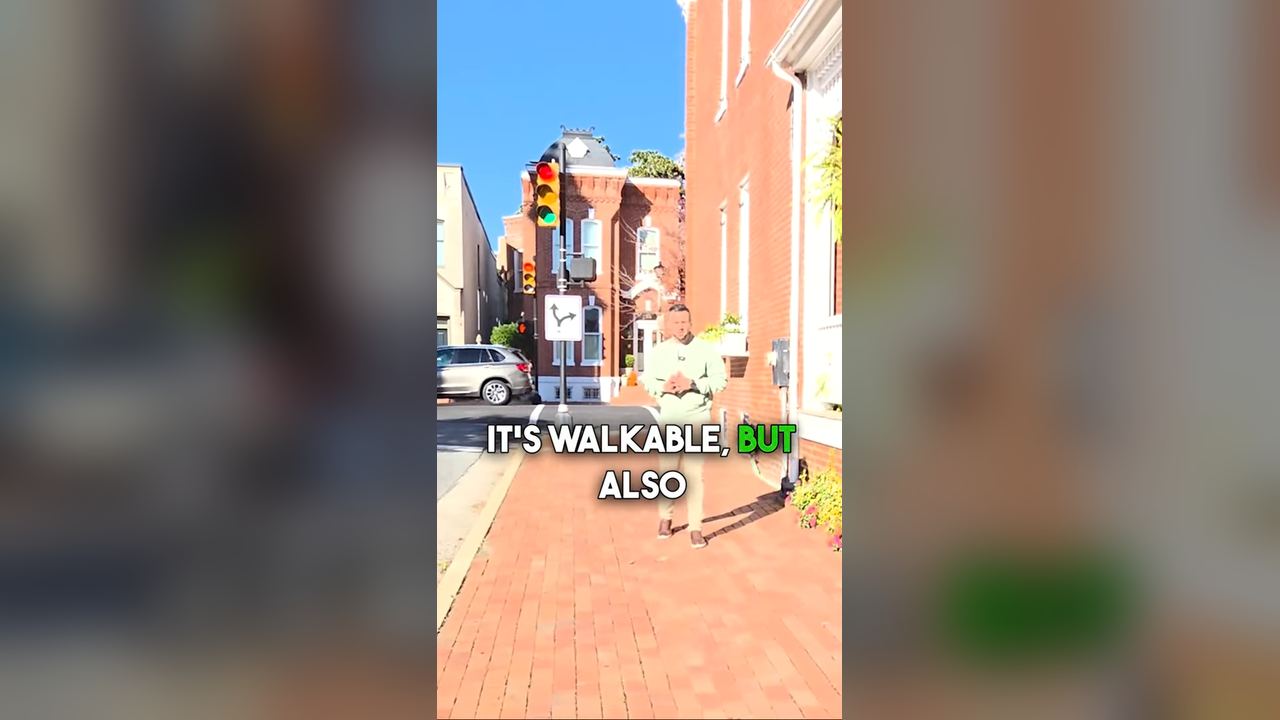
Federal-era townhomes, cobblestone blocks and waterfront condominiums inside a historic district Alexandria has regulated since 1946 — with Metro, Amtrak and VRE at the top of King Street.
Old Town Alexandria is the historic core of an independent Virginia city laid out in 1749, and it holds what the Virginia Department of Historic Resources calls the largest concentration of 18th- and 19th-century urban architecture in the Commonwealth. Federal and Georgian rowhouses, restored carriage houses and boutique waterfront condominiums line cobblestone streets running down to the Potomac. But buying here means buying into a set of rules as much as a streetscape: a Board of Architectural Review that must approve exterior changes, a FEMA flood map that reaches blocks inland from the bulkhead, and a residential permit-parking system that matters because most of these houses were built before cars.
Alexandria was established in 1749 on 60 acres above West's Hunting Creek Warehouse, and the first town lots were auctioned that July. What grew on that grid was listed on the National Register of Historic Places and designated a National Historic Landmark on the same day, November 13, 1966. The local rules came two decades earlier: on July 17, 1946 the City Council passed an ordinance protecting the exterior appearance of its historic buildings — the third such district in the United States, after Charleston and the Vieux Carré in New Orleans, and modeled so closely on the first that it was nicknamed the Charleston Ordinance. As the city describes the boundaries in August 2026, the Old and Historic Alexandria District runs generally from Hunting Creek at the city's southern edge north to Bashford Lane, and from the Potomac west to near the King Street Metro station, taking in the George Washington Memorial Parkway inside city limits plus a buffer zone on either side. Two boundary cautions: the 1966 National Historic Landmark line covers only the central portion of the larger National Register district, and ZIP 22314 is considerably larger than the regulated district — Carlyle, Eisenhower East and much of Old Town North share the ZIP without sharing the review process. All of it sits in the independent City of Alexandria, so city taxes, city services and Alexandria City Public Schools apply rather than Fairfax County's. As of August 2026, ACPS runs one comprehensive high school, Alexandria City High School, across its King Street and Minnie Howard campuses, and two middle schools, Francis C. Hammond and George Washington. Lyles-Crouch Traditional Academy (K-5) at 530 South Saint Asaph Street and Jefferson-Houston (PreK-8) are, as of August 2026, the ACPS schools in and beside Old Town. The School Board approved, on June 12, 2025, new attendance boundaries that took effect with the 2026-27 school year, so verify any specific address in the ACPS Attendance Zone Locator — and check the city's Historic Preservation map viewer to confirm whether that address is inside the district at all.
This is the single most practical thing to understand before you buy here, and it is where out-of-area buyers get surprised. A Certificate of Appropriateness from the Board of Architectural Review is required for all new construction and exterior alterations to structures in the district that are visible from a public right of way — a phrase that is read broadly, so confirm the specific reading for your property with Preservation staff. Separately, a Permit to Demolish is required for demolition or capsulation of more than 25 square feet of material regardless of whether anyone can see it, a lower threshold than it sounds: stripping siding, taking down a chimney or opening a rear wall can all cross it. Not everything goes to a hearing. Preservation staff can approve routine work administratively — repainting in the same color, replacing roofing in kind, compliant signage, minor landscaping and ordinary maintenance — and as of August 2026 the city says administrative review normally takes fewer than five business days. Everything else is docketed for a public hearing, where the board may approve as submitted, approve with changes, deny, or defer for restudy at the applicant's request. Specifics worth knowing before you plan a renovation: replacement windows, ground-mounted HVAC condenser placement and screening, and low-profile solar all have their own standards — ask Preservation staff for the current specifications before you price the work. The rulebook is being rewritten: as of August 2026, draft chapters meant to replace the 1993 guidelines were out for public comment, with the comment window set to close September 2, 2026. Check the city's Historic Preservation page for the current status before relying on the 1993 guidelines. One more layer catches people: Alexandria's Archaeological Protection Code, adopted by Council on November 18, 1989 and folded into the zoning ordinance in 1992, gives city archaeologists review of ground-disturbing permits and can require evaluation — and on larger projects, excavation at the applicant's expense — before you dig. If a renovation is the reason you want the house, call Preservation staff at 703.746.3833 (current as of August 2026) and ask for the property's BAR file before you write the offer, not after.
Old Town's inventory is genuinely layered, and the eras sit shoulder to shoulder on the same block. The Georgian and Federal rows are the most recognizable. Gentry Row is the 200 block of Prince Street, where merchants and officials built late in the 18th century; Captain's Row is the 100 block of Prince, the oldest cobblestone block in the city, named for Captain John Harper, who built many of its houses in the late 1700s. Read the dated plaques with some skepticism — that block and much around it burned on January 18, 1827, so the fabric behind a 1780s date is frequently later. Alexandria also produced a form of its own, the flounder: a house with a single-sloped roof and a tall blank wall on one side, often built first as a rear dwelling while the owner saved to add a grander front section. The city may once have held as many as 75 of them. Around and after those came Greek Revival and late-19th-century Victorian infill, 20th-century Colonial Revival built deliberately to read as Federal, restored carriage houses, and later townhouse groups such as Waterford Place, Harborside and Ford's Landing. The newest layer is the waterfront condominium: Robinson Landing, developed by EYA with JBG Smith on the block bounded by Duke, Union and Wolfe streets and designed by Shalom Baranes Associates, added 26 elevator townhomes and 70 condominiums, with first condominium move-ins in summer 2020. Practically, construction era tells you more here than square footage does. Party walls, shared rear alleys, small lots, English basements and mechanical systems threaded through two-century-old fabric are the norm in the rows; elevator buildings, garage assignments and condominium reserve studies are the norm on the water. Zoning is oriented to those small lots, and height in and around the historic core is governed both by the underlying zone and by a separate height district, so confirm both for any specific address with Planning & Zoning. Meanwhile, the citywide Zoning for Housing amendments, which allow more units on lots formerly zoned single-family, remain in force: the Alexandria Circuit Court granted the city summary judgment on November 12, 2025, and the residents who brought the challenge noted an appeal the following month. As of August 2026 that appeal was pending before the Court of Appeals of Virginia, and the amendments had not been set aside. Confirm the current status before relying on it, and ask what can be built next door, not only what stands there today.
Two different water problems meet at the foot of King Street, and both are mapped. The first is the 1%-annual-chance floodplain. FEMA's current Flood Insurance Rate Maps for Alexandria took effect January 11, 2024, following a Letter of Final Determination issued July 11, 2023, and the city says about 20 percent of Alexandria is mapped as floodplain. Property inside a Special Flood Hazard Area will generally require flood insurance if the mortgage is federally backed, and in Old Town that area reaches inland from the river rather than stopping at the bulkhead. As of August 2026, Alexandria participates in FEMA's Community Rating System at Class 6, which the city says earns policyholders up to a 20 percent discount on their flood insurance premiums. Elevation certificates from recent construction are available on request from the city's floodplain administrator, 703.746.6499 (current as of August 2026). The second problem is nuisance high-tide flooding, which arrives on clear days as the river backs up through the waterfront storm outfalls onto lower King, lower Prince and The Strand. On October 29, 2021 the National Weather Service gauge at Alexandria recorded a stage of 5.99 feet, the third-highest reading in its record, behind Hurricane Isabel in September 2003 and the Potomac flood of March 1936. The city's answer traces to the Waterfront Small Area Plan adopted February 12, 2012 and the flood-mitigation-and-promenade option Council adopted January 27, 2015, designed to a protection elevation of +6.0 feet NAVD88. That plan changed materially in 2026: after the National Park Service denied the proposed pump station at Waterfront Park in February, Council voted on June 13, 2026 to advance an enhanced gravity storm sewer alternative instead. That alternative covers upsized storm sewers; backflow-prevention and flood-control gates and valves; replacement and raising of sections of bulkhead and shoreline to elevation 6; restoration of Waterfront Park; and pedestrian improvements including a raised crossing on the unit and 100 blocks of lower King. Utility test pits were dug July 13-24, 2026 along King Street, The Strand, Union Street between King and Prince, Prince Street, and inside Waterfront Park and Point Lumley Park. The project stood at 30 percent design when Council acted, with 70 percent design targeted for fall 2026, final design running winter 2026 into spring 2027, and construction starting summer or fall 2027. As of August 2026, nothing was yet under construction, park closure durations under the redesigned plan had not been published, and Point Lumley Park improvements may be deferred for budget reasons. That schedule is the one set at the June 13, 2026 Council action, so confirm the current status. If you are buying within a few blocks of the river, obtain the elevation certificate and a real bound flood-insurance quote before releasing a contingency, and ask how close the address sits to the project's construction limits.
King Street runs roughly a mile from the Metro station down to the river, and its lower end is now permanently closed to cars. Council made the 100 block permanent in October 2021 after the pandemic-era closure held, added the unit block in 2022, and voted unanimously on September 13, 2025 to permanently pedestrianize the 200 block between Lee and Fairfax streets, following two pilot phases that ran November 2024 to January 2025 and March to September 2025. As of August 2026, streetscape design for those blocks was continuing, with construction possible at the end of 2026 as part of the Waterfront Implementation Project; confirm the current schedule with the city. At the top of the pedestrian zone, Market Square has hosted the Old Town Farmers' Market since 1753, and the city calls it the oldest farmers' market in the country held continuously at the same site. On January 10, 2026 the market moved temporarily to the 100 block of North Royal Street and the Tavern Square courtyard for a two-to-three-year City Hall and Market Square renovation, so check the city's market page for the current location. As of August 2026 it was running there on Saturdays, 7 a.m. to noon, year-round, with more than 70 vendors in peak season. Three blocks east, at the river, the Torpedo Factory Art Center at 105 North Union Street occupies the U.S. Naval Torpedo Station, whose construction began November 12, 1918; it reopened as an art center on September 15, 1974 and, as of August 2026, is described as holding the largest number of publicly accessible working artist studios in the United States. From the pier at the foot of King, City Cruises' Potomac Water Taxi connects Old Town with The Wharf, Georgetown and National Harbor; the 2026 season runs March into December. Add Founders Park, Oronoco Bay and the Mount Vernon Trail along the river edge, and the everyday case for Old Town is simply that the errands and the recreation are both on foot.
Based on information from Bright MLS for September 1, 2026 through September 30, 2026; data is reliable but not guaranteed.
King St-Old Town station at 1900 King Street opened December 17, 1983 and is served by both the Blue and Yellow lines — it is the southernmost point at which the two run together, since they diverge just south of the platform. Two things about the station routinely trip up buyers. First, Reagan National Airport is three stops north, not one: Braddock Road, then Potomac Yard, then the airport. Second, this is not a park-and-ride — the station's metered parking was eliminated in the redesign completed in 2021, so plan on walking, the trolley or a bus. Alexandria Union Station sits adjacent at 110 Callahan Drive, carrying Amtrak plus Virginia Railway Express service on both the Fredericksburg and Manassas lines, which converge here; transferring between the two stations means exiting and walking a narrow King Street sidewalk. A direct connection between them has been proposed for years and, as of August 2026, had not been built. The free King Street Trolley, operated by DASH, links the Metro station to City Hall and Market Square, running every 15 minutes from 11 a.m. to 11 p.m., 365 days a year as of August 2026 — note that the North Fairfax and King stop was relocated for the multi-year Market Square renovation and will move more than once during the work, so check DASH for the stop's current location. As of August 2026, DASH routes 30, 31, 32, 33 and 102 serve the station, as do several Metrobus routes. For drivers, Washington Street through Old Town carries the George Washington Memorial Parkway designation, running north toward Washington and south toward Mount Vernon — and the city's historic district explicitly includes the portion of the parkway inside city limits plus a buffer zone on either side. Travel times into the District swing widely by hour and route, so drive your actual commute at your actual departure time before you commit to a block.
Most historic Old Town houses were built before cars and have no driveway or garage, which makes the city's parking rules a live cost and a live constraint rather than a footnote. Old Town falls under residential permit parking, where vehicles without a district permit are limited to two or three hours, with the limit and the enforceable hours set block by block on the posted signs. Permits are issued only to full-time residents inside a district — property owners who do not live on site and employees of businesses registered at the address are not eligible — and the city prices each vehicle differently: $55 for the first, $75 for the second, and $250 for each one after that. A permit does not exempt you from the citywide 72-hour continuous-parking rule, and it is valid only inside the district it was issued for. Short-term permits are handled separately: guest permits valid up to 24 hours are free, and visitor permits run up to 30 days and cost $5 for stays beyond seven days. Contractor permits, for people working at the house, are free, with a limit of three per residence. In the commercial core, metered spaces allow two or three hours Monday through Saturday, with rates, days and hours varying by location. All of these permit rules, fees and meter limits are current as of August 2026; confirm them with the city. Before you write an offer, look up the exact block on the city's interactive parking map, read the signs on that street yourself, and — if the property has a rear alley space or a curb cut — confirm in writing that the off-street space conveys and is legal, because in a district this old that is not a given.
 Buying
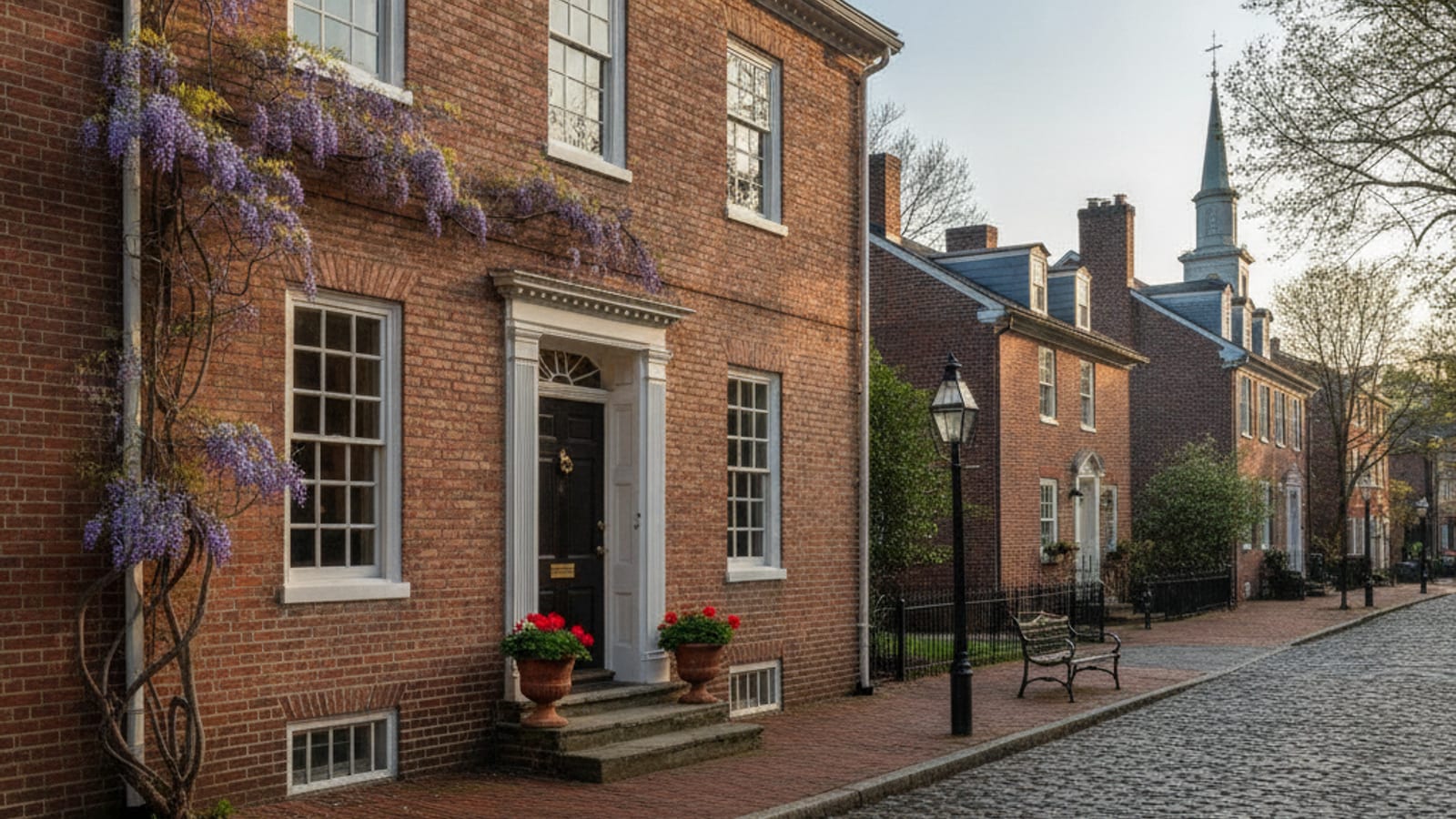
A buyer's guide to Old Town Alexandria's historic district: BAR approval, floodplain rules, and what to inspect in an 18th- or 19th-century home.
 Buying
Downsizing in Alexandria, VA and wondering where to move? Explore the best nearby neighborhoods and suburbs for a smaller home.
 Communities
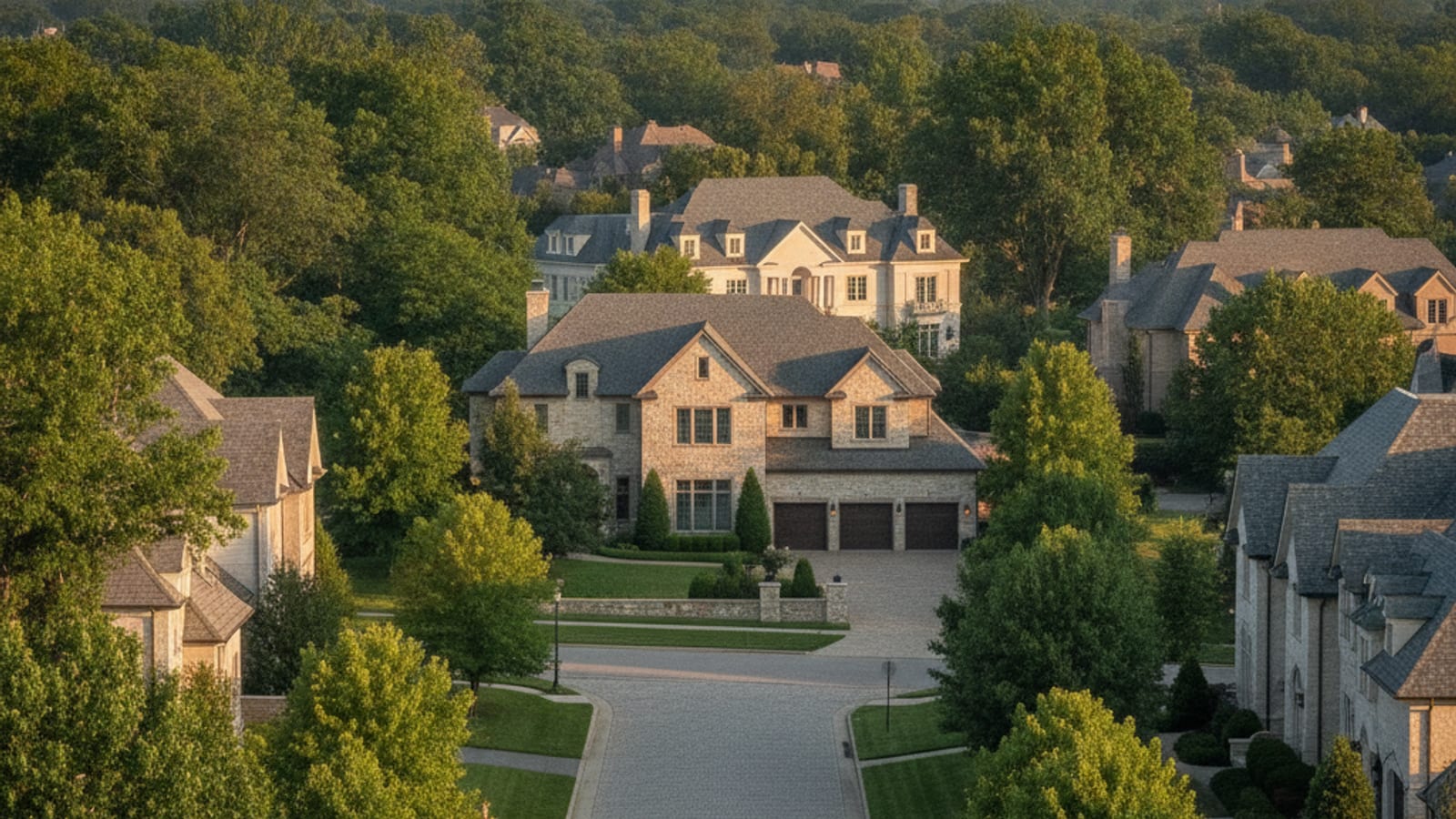
Bright MLS's August 2026 figures by jurisdiction, and what each of 16 areas around Washington offers by home type, lot and setting.
Browse current listings, or reach Artur directly for private and off-market opportunities.
Old Town's inventory spans four centuries. The oldest layer is the Georgian and Federal rowhouse of the late 1700s and early 1800s, along with a form Alexandria produced itself: the flounder, a house with a single-sloped roof and a tall blank side wall, often built first as a rear dwelling. After those came Greek Revival and late-19th-century Victorian infill, 20th-century Colonial Revival built to read as Federal, and restored carriage houses. Later townhouse groups such as Waterford Place, Harborside and Ford's Landing fill in more recent decades, and the newest layer is the waterfront condominium — Robinson Landing, whose 26 elevator townhomes and 70 condominiums saw first move-ins in summer 2020. Because the district is architecturally regulated and the lots are small, new construction is limited. In practice, construction era, party-wall condition and whether any off-street parking conveys tell you more than square footage does.
Usually, yes. A Certificate of Appropriateness is required for all new construction and exterior alterations in the Old and Historic Alexandria District that are visible from a public right of way — a phrase that is read broadly, so confirm the specific reading for your property with Preservation staff. A Permit to Demolish is required for demolishing or capsulating more than 25 square feet of material regardless of visibility, and that threshold is lower than it sounds: stripping siding, taking down a chimney or opening a rear wall can all cross it. Preservation staff can approve minor work administratively — repainting the same color, in-kind roof replacement, compliant signage, minor landscaping and routine maintenance — and as of August 2026 the city says that review normally takes fewer than five business days. Larger work goes to a public hearing where the board may approve, approve with changes, deny, or defer for restudy. Replacement windows, ground-mounted HVAC condenser placement and screening, and low-profile solar all have their own standards, so ask Preservation staff for the current specifications before you price the work. As of August 2026 the 1993 design guidelines were being rewritten, with draft chapters out for public comment and the comment window set to close September 2, 2026 — check the city's Historic Preservation page for the current status, and call Preservation staff at 703.746.3833 (current as of August 2026) before you buy for a renovation.
Parts of it are, and the Special Flood Hazard Area reaches inland from the river rather than stopping at the bulkhead. Alexandria's current FEMA Flood Insurance Rate Maps took effect January 11, 2024, after a Letter of Final Determination issued July 11, 2023, and the city says about 20 percent of Alexandria is mapped as floodplain. Inside a Special Flood Hazard Area, a federally backed mortgage will generally require flood insurance. As of August 2026, Alexandria participates in FEMA's Community Rating System at Class 6, which the city says earns policyholders up to a 20 percent discount on their premiums. Separately, nuisance high-tide flooding arrives on clear days as the river backs up through the waterfront storm outfalls onto lower King, lower Prince and The Strand. The city's fix is designed but not yet under construction: after the National Park Service denied a pump station at Waterfront Park, Council voted on June 13, 2026 to advance an enhanced gravity storm sewer system with raised bulkhead and flood-control gates, and the schedule set at that time put the start of construction in summer or fall 2027. Confirm the current status. Get the elevation certificate and a real bound insurance quote before releasing a contingency.
Old Town is covered by residential permit parking, and most historic houses here have no driveway or garage, so this is a real consideration rather than a detail. Vehicles without a district permit are limited to two or three hours depending on the block and the posted hours. Permits go only to full-time residents of the district — owners who do not live at the property and employees of businesses registered there are not eligible — and they cost $55 for the first vehicle, $75 for the second, and $250 for each additional vehicle. Permits do not override the citywide 72-hour continuous-parking limit and are valid only in the issuing district. Guest permits up to 24 hours are free, and visitor permits run to 30 days and cost $5 beyond seven days. Contractor permits, for people working at the house, are free, three per residence. Metered spaces in the commercial core allow two or three hours Monday through Saturday, with rates and hours varying by block. All of these rules and fees are current as of August 2026; confirm them with the city, and check the specific block on the city's interactive parking map before you commit.
King St-Old Town station at 1900 King Street, opened December 17, 1983, serves both the Blue and Yellow lines and is the southernmost station where the two run together. Reagan National Airport is three stops north, not one — a point listings often get wrong: the order is Braddock Road, then Potomac Yard, then the airport. The station's metered parking was removed in the redesign completed in 2021, so it does not function as a park-and-ride. As of August 2026, Alexandria Union Station is adjacent at 110 Callahan Drive with Amtrak service and Virginia Railway Express trains on both the Fredericksburg and Manassas lines, though transferring between the two stations means walking the King Street sidewalk. The free DASH King Street Trolley connects the station to City Hall and Market Square every 15 minutes, 11 a.m. to 11 p.m., 365 days a year as of August 2026, though stops shift during the Market Square renovation, so check DASH for current locations. Drive times into the District vary widely by hour and route, so test your own commute before choosing a block.
Browse current Old Town listings below — as of August 2026 the feed runs city-wide, so filter to the Old Town area, bearing in mind that ZIP 22314 covers considerably more ground than the regulated historic district — or contact Artur Guney directly at (703) 402-7500 (current as of August 2026). Because so much of what matters here is not on the listing sheet, Artur can pull a property's Board of Architectural Review file and any open violations, check whether the address falls inside the historic district or simply shares the ZIP code, review a condominium's reserve study and resale certificate, and tell you where a specific block sits relative to the FEMA flood map and the waterfront project's construction limits.
Which schools serve an address in Old Town Alexandria, how the feeder structure works, and the district's own boundary locator.
Schools serving Old Town Alexandria →Independent day schools serving Old Town Alexandria, where the campuses are, and which run buses — the one part of private schooling that depends on your address.
Private schools in Northern Virginia →The parks, trails, shopping and recreation around Old Town Alexandria — every venue confirmed open as of August 2026.
Parks, shopping & recreation in Old Town Alexandria →Four have guides of their own: