
Living in Leesburg, VA is a choice that reveals itself slowly — and then all at once. The town sits at the eastern side of Loudoun County, roughly 35 miles from downtown Washington, DC, close enough to the capital's economy yet insulated from its density and price pressure. Home prices here run below those in McLean and Great Falls, yet Leesburg still offers real square footage, a proper yard, and genuine community character. This guide covers the proximity-for-space trade-off, what the historic downtown actually delivers, the unvarnished commute reality, what an $800K budget gets you on the ground, and the under-the-radar spots locals love most.
What Is Leesburg's Core Trade-Off for Living in Leesburg, VA?
Leesburg trades proximity for space and quality of life. In return for the distance, the town offers proper backyards and walkable town life on weekends, with the historic core and the wine-country leisure options just minutes west adding to the draw. The housing stock runs from detached single-family homes to smaller-footprint homes that don't sacrifice elegance. Homes in Leesburg are served by Loudoun County Public Schools. The cost is commute time: peak-hour drives toward Tysons, Rosslyn, and DC are long (see the commute section below).
On value, the comparison with closer-in Fairfax County favors Leesburg: Fairfax's median listing price was $767,000 in July 2026 (Realtor.com via FRED), often for significantly less space. For a broader look at how budgets stretch differently across Northern Virginia, see how Alexandria VA neighborhood home prices compare at different price points.
What Does the Historic Downtown Actually Offer?
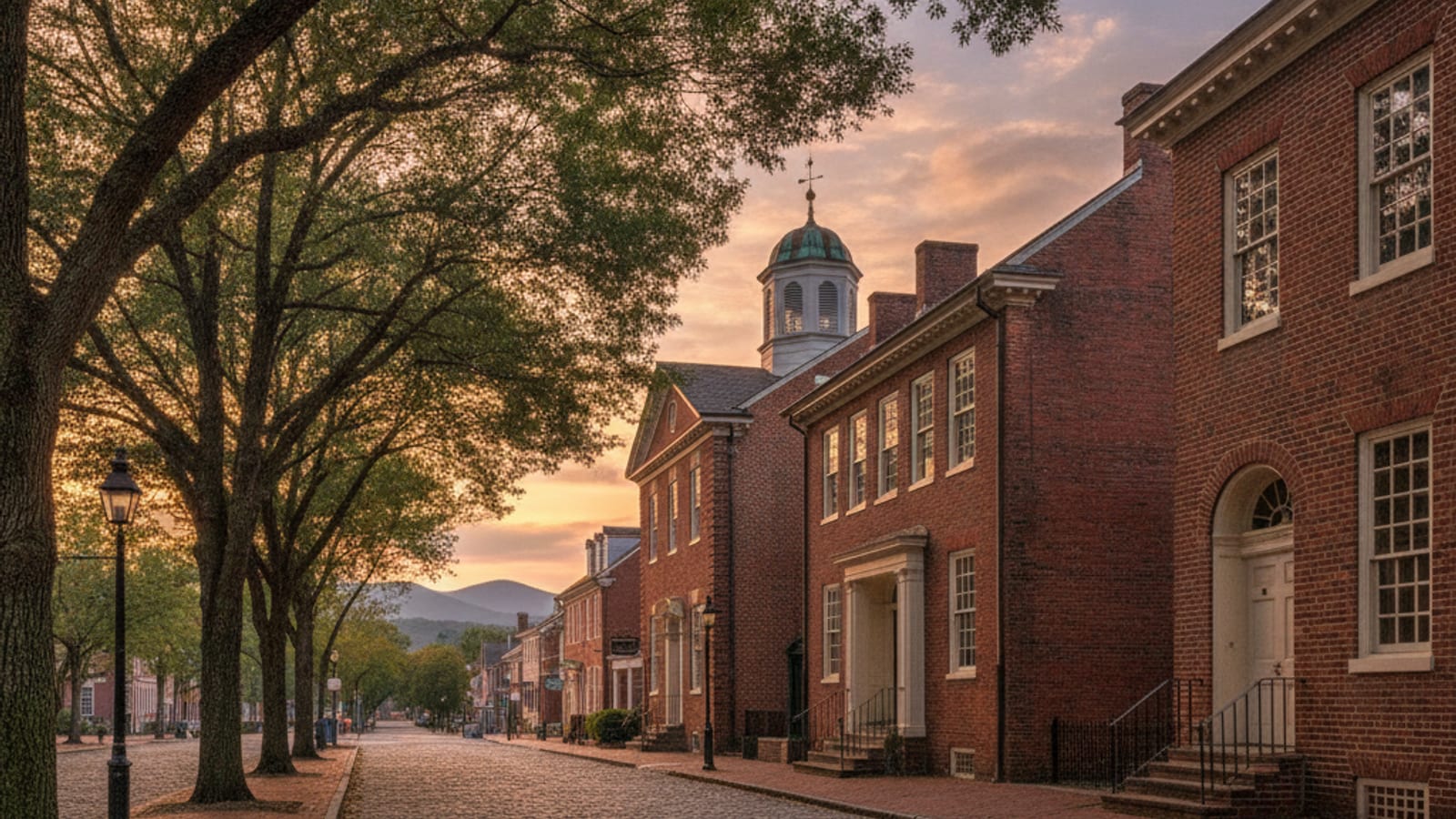
Leesburg's downtown, centered on King Street and the surrounding blocks, is one of the most genuinely intact 18th-century streetscapes in the DC metro. This isn't a manufactured "old town" — it evolved over 270-plus years and still functions as a real commercial hub, not a tourist shell. On any Saturday morning you'll find locals at Lightfoot Restaurant (housed in a converted 1888 bank building), browsing the year-round Saturday farmers market at Virginia Village on Catoctin Circle, or picking up wine at one of the dozen-plus tasting rooms within a short drive on the Loudoun Wine Trail.
Brunch crowds fill spots like Tuscarora Mill — "Tuskies" to regulars — and the town consistently draws visitors from across the metro specifically because it feels authentic. The weekly Leesburg Farmers Market runs year-round and is a legitimate social institution for residents. For fitness and leisure, Ida Lee Recreation Center offers one of the best municipal facilities in Loudoun County: indoor pool, fitness center, tennis courts, and miles of connected trail access. Compared with Great Falls, covered in our Great Falls relocation guide, Leesburg offers far more walkable retail and dining built directly into the neighborhood fabric.
The Commute Reality: DC and Tysons
Commute time is one of the biggest practical factors in a Leesburg purchase. The Route 7 corridor between Leesburg and Tysons is heavily traveled, and peak-hour congestion is real. On a good day, the drive to Tysons Corner runs 35–45 minutes. On a bad day — and the stretch near Sterling and Loudoun County Parkway has bad days — it can stretch to 75 minutes or more. Early departures (before 7 a.m.) or late departures (after 7 p.m.) are the usual way to manage that variability.
The WMATA Silver Line's extension to Ashburn station, which opened in 2022, added a rail option: you can park at Ashburn or Loudoun Gateway stations and ride the Metro into Tysons, Rosslyn, or central DC without touching the Beltway. The Leesburg Park & Ride on Gourley Transit Drive, off Sycolin Road, is also served by Loudoun County Transit commuter buses that run at rush hour to downtown DC and to Rosslyn, the Pentagon, and Crystal City. On days without a commute, Leesburg's growing coffee-shop and coworking scene — including spots like the Leesburg Public Library's quiet study spaces — offers places to work outside the home. The commute is workable. Just don't romanticize it.
What Does $800K Buy in Leesburg?
This is where Leesburg stands out against higher-priced markets closer to DC. An $800,000 budget in Leesburg, as of mid-2026, typically delivers a detached single-family home with four to five bedrooms, two-car garage, finished basement, and a proper lot — often a quarter-acre or more in established neighborhoods like Woodlea Manor. Homes in this range frequently include hardwood throughout the main level, updated kitchens with stone countertops, and primary suites with spa-style baths.
Compare that to Fairfax County's July 2026 median of $767,000 (Realtor.com via FRED), where that figure buys a townhome or a modestly sized detached home in many ZIP codes, often with a postage-stamp yard. With the current 30-year mortgage rate at 6.66% (Freddie Mac via FRED, August 2026), monthly principal and interest on an $800K purchase with 20% down comes to approximately $4,100 — meaningful, but often hundreds of dollars less than a comparable payment in McLean or Arlington for far less space.
Loudoun County's 2026 real property tax rate is $0.805 per $100 of assessed value, which on an $800K assessment translates to roughly $6,440 per year — competitive with neighboring jurisdictions. Homes inside the town limits also pay the Town of Leesburg's own real estate tax on top of the county rate: about 17.7 cents per $100, or roughly $1,400 a year on the same assessment.
When comparing what a set budget actually purchases across different Northern Virginia communities, it also helps to review the key resale value factors that determine long-term equity performance — they apply equally well in Loudoun County. If you are weighing other suburban corridors at a similar price point, the Bethesda vs Potomac comparison illustrates how space, price, and commute trade-offs play out in a neighboring market.
Hidden-Gem Spots That Locals Rate
Ask a Leesburg resident where they actually spend their weekends and you'll get a very different list than what appears on visitor websites. These are the places that define the lived experience:
- Morven Park: A 1,000-acre estate just northwest of town with carriage museum, equestrian center, and miles of trails — almost entirely uncrowded on weekday mornings and a stunning backdrop in any season.
- Leesburg Animal Park: Surprisingly beloved by locals; not a zoo, more of a hands-on farm experience that fills a specific and appreciated niche.
- Catoctin Creek Distilling Company: Loudoun's first legal distillery since Prohibition, a short drive west in Purcellville — locals treat the tasting room as a neighborhood bar with character.
- Ball's Bluff Battlefield Regional Park: A small but evocative Civil War battlefield on a Potomac River bluff, rarely crowded, with interpretive trails and striking river views. One of the most undervisited historic sites in the entire DC metro.
- Tuscarora Mill (Tuskies): Technically well-known, but locals know to sit at the bar, order the duck confit, and skip the wait — it rewards those in the know.
- The W&OD Trail: The paved Washington & Old Dominion rail-trail runs through Leesburg, with access at Tuscarora Creek Park and a King Street crossing near the historic district — an off-street route through town for walking and biking.
With this kind of locally textured leisure, Leesburg sits in the same spirit as Great Falls — where, as our guide to Great Falls hidden gems explores, the best experiences are rarely the most advertised ones.
How Does Leesburg Compare to Closer-In Options?
Against Tysons-adjacent communities like Vienna or communities closer to the Silver Line, the trade-off is time versus space and price — and Leesburg wins the space-and-price side of that equation decisively. The town has real identity and a historic downtown that functions rather than performs. For a specific read on what's available right now, browse Leesburg homes for sale to see the active inventory across all price points. The market moves — but the town's appeal is durable.